
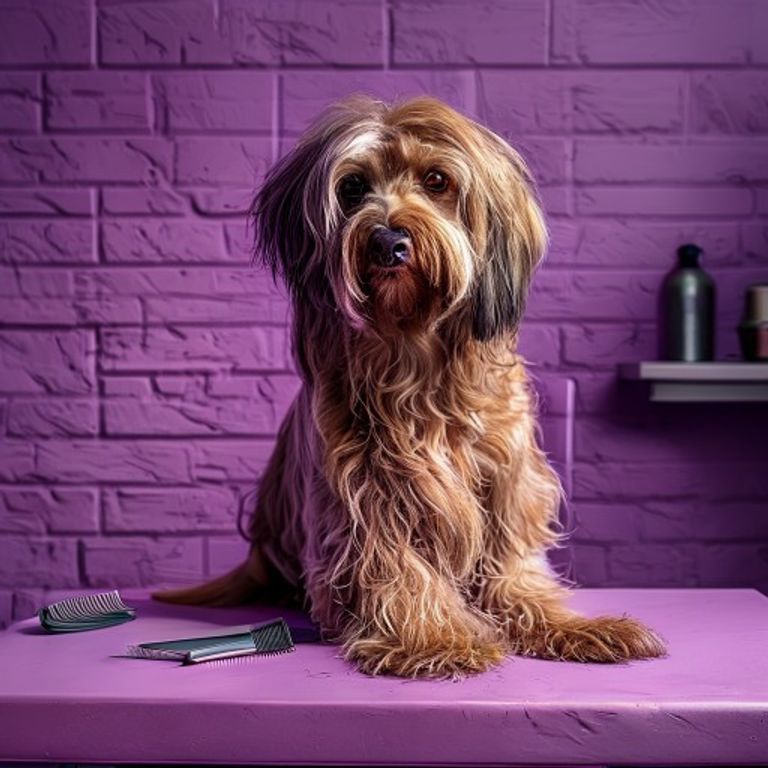
A mat is not "slightly tangled hair". It is a dense clump of living and dead hair that pulls on the skin and grows like a snowball: the bigger it gets, the faster it winds new hair into itself. Owners often bring us a pet saying "we tried to brush it out, he won't let us". He won't let you not out of spite — it hurts. Let's break down where mats come from, why they are dangerous and what to do about them properly.
Where mats come from
Coat felts up where there is friction and moisture: behind the ears, under the collar, in the armpits, on the "pants" and belly. The main causes are dead undercoat that wasn't brushed out in time, bathing without proper drying and brushing "down to the skin", and seasonal shedding, when old hair stays in the coat and felts together with the new. A special classic: the dog gets washed at home, towel-dried "as it goes" — and two days later the coat has turned to felt. Wet coat mats several times faster than dry.
Why a mat is dangerous
It is not a cosmetic problem but a medical one. A dense clump constantly pulls on the skin — imagine being held by your hair around the clock. There is no ventilation under a mat: the skin gets sore, irritations and dermatitis appear, and parasites happily settle in the damp felted mass. In advanced cases, scratches and wounds are found under mats that the owner never even saw. And in summer, solid felt works like a felt boot — overheating instead of thermoregulation.
Why "just brushing it out" at home is a bad idea
Brushing felted coat "live" means pulling hairs out of the skin, dozens per stroke. It hurts, and the pet remembers forever: brush = pain. After a couple of such sessions the dog starts fearing any grooming — both at home and at the salon. The second problem is tools: without a dematting knife, a proper slicker brush and layer-by-layer technique, you are more likely to chafe the skin than untangle the clump. And most importantly: never bathe a matted dog — water tightens mats even more.
How groomers handle it
First — an honest assessment. Small fresh mats we take apart layer by layer: dematting knife, conditioning spray, slicker brush — slowly and painlessly. If the coat has felted down to the skin into a solid shell, it is kinder to clip it once and grow a new healthy coat than to torment the animal for hours. Yes, it looks radical — but it is easier on the pet, and a dog's coat grows back. Working with a neglected coat takes longer, so the final price may be higher — the groomer always quotes it before starting.
Prevention is cheaper than treatment
Three rules that solve the problem for good: brush your pet down to the skin two-three times a week, not just the top layer; dry and comb through after baths and rainy walks; and bring your pet in for professional care at the frequency recommended for the breed — your personal account on our site has a tracker that tells you when it is time. During shedding season, express de-shedding works wonders: we remove the dead undercoat before it felts.
If mats have already appeared — don't wait and don't torture your pet with a brush. Book a grooming appointment: we will assess the coat honestly and choose the gentlest option.